
Turning 65 & Medicare
Here’s What You Need to Do Next.
Medicare has important enrollment dates around your 65th birthday. We’ll help you understand when to sign up, what choices you have, and what steps to take next.
KNOW YOUR DATES
Know when your Medicare enrollment period starts, when coverage can begin, and the deadlines you do not want to miss.
KNOW IF YOU NEED TO ENROLL
If you’re still working, your employer coverage determines whether you need to enroll in Part B at 65.
COMPARE YOUR CHOICES
Learn how Original Medicare, Medicare Advantage, Medicare Supplement, and Part D work before you choose your coverage.
TURNING 65 IN COLUMBUS OR CENTRAL OHIO?
We help people throughout Columbus and Central Ohio understand when to enroll, what Medicare choices they have, and what to do next.
Serving Franklin, Madison, Pickaway, Fairfield, and Ross Counties.
Your 7-Month Medicare
Sign-Up Window
You do not have to learn everything about Medicare at once. Start with your sign-up dates. Then take it one step at a time.
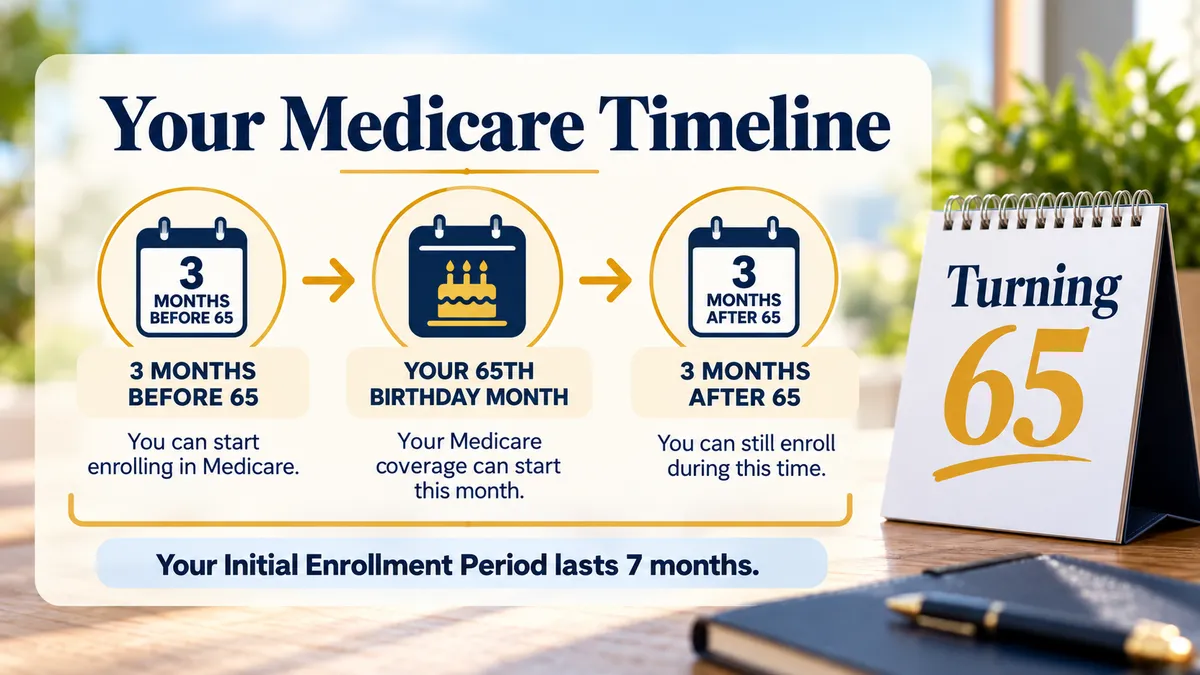
Your Initial Enrollment Period — your first Medicare sign-up window — lasts 7 months.
It begins 3 months before the month you turn 65, includes your birthday month, and ends 3 months after your birthday month.
If you need Medicare at 65, starting early helps make sure your coverage is ready when you need it.
3 Months Before
Your Birthday Month
If you need Medicare at 65, start here.
Find out if you need to sign up for Medicare.
Enroll in Part A and Part B if they apply to your situation.
Learn your Medicare coverage choices.
Make a list of your doctors and prescriptions.
Review your expected Medicare premiums and out-of-pocket costs.
Your Birthday
Month
You can still sign up, but Part B coverage starts the next month.
You are still in your Initial Enrollment Period.
If you sign up during your birthday month, your Part B coverage starts the first day of the next month.
Choose how you want to receive your Medicare coverage.
Check your doctors, prescriptions, and costs before choosing coverage.
3 Months After
Your Birthday Month
You are still in your Initial Enrollment Period, but your Part B coverage starts the month after you enroll.
These are the final 3 months of your Initial Enrollment Period.
If you sign up during these 3 months, Part B coverage starts the first day of the month after you enroll.
If you need Medicare, sign up before your Initial Enrollment Period ends.
Waiting can create a gap in your Part B coverage.
After your Initial Enrollment Period ends, delaying Part B without a qualifying Special Enrollment Period can result in a late enrollment penalty.
When Will My Part B Coverage Start?
If you enroll during the 3 months before your birthday month, Part B starts on the first day of your birthday month.
Example: Birthday July 20 → Part B starts July 1.
Birthday on the 1st? Your Dates Move Earlier.
If your 65th birthday is on the first day of the month, Medicare uses the previous month to determine your Initial Enrollment Period and coverage start date.
Example: Birthday July 1 → Part B can start June 1.
Your 7-month Initial Enrollment Period also begins and ends one month earlier.
Still Working at 65?
If you have group health coverage based on your current employment or your spouse’s current employment, you may be able to delay Part B without a late enrollment penalty.
Before delaying Part B, confirm how your employer coverage works with Medicare. Employer size, which coverage pays first, prescription drug coverage, and HSA rules can affect your decision.
Do not assume you should enroll or wait.
Do I Need to Enroll in
Medicare at 65?
It depends on your situation. Start with one simple question: Will you still have health insurance from your current job, or your spouse’s current job, when you turn 65?
Retiring or No Longer Covered by a Current Employer?
If you will not have health insurance based on your current employment or your spouse’s current employment, start planning for Medicare before that coverage ends.
Find out when your current health coverage will end.
Find out when you need Medicare coverage to start.
Enroll in Part A and Part B if they apply to your situation.
Compare how you want to receive your Medicare coverage.
Review your prescription drug coverage.
Check your doctors, prescriptions, and costs before choosing coverage.
Still Working and Have Employer Health Insurance?
If you have group health coverage based on your current employment or your spouse’s current employment, you may be able to delay Part B without a late enrollment penalty.
Do not assume you should wait. Confirm how your employer health plan works with Medicare before making your decision.
Ask whether you need Medicare while you are still working.
Confirm your employer size and which coverage pays first.
Review whether your prescription drug coverage is creditable.
Check your HSA before enrolling in Medicare.
Know when you will need to enroll after your employment or employer coverage ends.
The Simple Answer
Start planning for Medicare before your current employer health coverage ends.
Confirm how your employer health plan works with Medicare before deciding whether to enroll in Part B or delay it.
Still Working Past 65?
Your next step is to understand how your employer health insurance works with Medicare. Employer size, which coverage pays first, prescription drug coverage, and HSA rules all matter.
Still Working at 65? You Might Be Able to Wait on Part B
Turning 65 does not always mean you need to leave your employer health plan. Start by finding out how your current health insurance works with Medicare.
Start With One Simple Question
Is your health insurance from your current job or your spouse's current job? If yes, you might be able to wait to sign up for Medicare Part B.
Three Things to Check Before You Decide
Is Your Insurance From a Current Job?
The word current matters. Insurance from your current job or your spouse's current job has different Medicare rules than COBRA or retiree insurance.
How Does Your Employer Plan Work With Medicare?
One important question is which insurance pays first. Employer size often helps determine the answer.
Your Employer Plan Usually Pays First
If the employer has 20 or more employees, the employer health plan usually pays first.
You might be able to keep your employer coverage and wait to sign up for Part B without a late enrollment penalty.
Medicare Usually Pays First
If the employer has fewer than 20 employees, Medicare usually pays first once you are eligible for Medicare.
You might need Medicare at 65 for your employer health plan to pay correctly.
Don't Decide From the Employee Number Alone
Some employer plans have different rules. Ask your benefits department or insurance company this simple question: "When I turn 65, does Medicare or my employer health plan pay first?"
Do You Have an HSA?
If you put money into a Health Savings Account, check your Medicare start date before you enroll. Medicare affects when you are allowed to keep adding money to your HSA.
These Types of Coverage Are Different
Current Employer Coverage
Coverage from your current job or your spouse's current job might allow you to delay Part B without a late enrollment penalty.
COBRA
COBRA is not considered coverage from current employment for the Part B Special Enrollment Period. COBRA does not give you extra time to delay Part B.
Retiree Insurance
Retiree insurance is also different from coverage based on current employment. Check how your retiree plan works with Medicare before you retire.
Plan for Medicare Before Your Employer Coverage Ends
If you delayed Part B because you had qualifying health insurance from current employment, start planning before you retire.
Important: COBRA Does Not Give You More Time
Taking COBRA after you stop working does not restart your 8-month Part B sign-up period. That clock is tied to current employment and qualifying employer health coverage.
Have an HSA?
Check your HSA before signing up for Medicare. Medicare has special HSA rules, especially if you work past 65. We explain those rules in the next section.
Still Working Past 65?
Whether you need Medicare at 65 depends on how your employer health coverage works with Medicare. Our Working Past 65 guide explains what to check before you sign up or wait.
Learn About Working Past 65 →Have an HSA? Check It Before You Sign Up for Medicare
If you have an HSA, there is one important Medicare rule you need to understand before you sign up.
Once Medicare Starts, Stop Adding Money to Your HSA
You cannot contribute to an HSA for months when you have Medicare. This includes money you add and money your employer adds.
You Do Not Lose the Money Already in Your HSA
The money already in your HSA is still yours. You can continue using it for qualified medical expenses. The rule is about adding new money after your Medicare coverage begins.
What Should You Do?
Find Out When Medicare Will Start
Before signing up, find out the month your Medicare coverage will begin.
Know When HSA Contributions Must Stop
Make sure you and your employer stop HSA contributions early enough to avoid an overlap with Medicare.
Then Sign Up for Medicare
Make sure your HSA contributions and Medicare coverage do not cover the same months.
This Is Where You Need to Be Careful
If you keep working after 65 and wait to sign up for Medicare, Medicare Part A might start before the month you sign up.
For some people, Part A can go back as far as 6 months. This matters if you were still putting money into your HSA during those months.
You Are 67 and Plan to Sign Up for Medicare in July
Your Medicare Part A coverage might go back as far as January.
If you or your employer added money to your HSA for those months, you might have a tax problem.
This is why you should check your Medicare start date before making your final HSA contributions.
Birthday on the 1st? Your Timing Is Different
If your birthday is on the first day of the month, Medicare treats you as turning 65 the month before. This can also move your HSA deadline earlier. Check your dates before making your last HSA contribution.
The Simple Rule to Remember
Have an HSA? Find out when your Medicare coverage will start before you sign up. Then make sure you and your employer stop HSA contributions early enough to avoid an overlap.
How Do You Want to Get Your Medicare Coverage?
Once you have Medicare Part A and Part B, you have two main ways to get your Medicare coverage. Let's make them easy to understand.
Original Medicare
Medicare Part A + Part B
Original Medicare helps cover hospital and medical care.
Medicare Supplement
A Medicare Supplement helps pay some of the costs Original Medicare leaves for you to pay.
Part D
A separate Part D plan helps cover prescription drugs.
Simple way to think about it: You keep Original Medicare and add coverage to help with medical costs and prescription drugs.
Medicare Advantage
Medicare Part A + Part B
You must have Part A and Part B to join a Medicare Advantage plan.
Medicare Advantage
You receive your Medicare-covered health benefits through a private insurance plan.
Prescription Drug Coverage
Most Medicare Advantage plans include prescription drug coverage. Many also offer extra benefits.
Simple way to think about it: You still have Medicare, but a Medicare Advantage plan becomes the way you receive your Medicare-covered services.
You Still Have Medicare
Choosing Medicare Advantage does not mean you give up Medicare. You must have Part A and Part B to join a Medicare Advantage plan. The Medicare Advantage plan becomes the way you receive your Medicare-covered health services.
What Are the Biggest Differences?
You do not need to memorize everything. Start with these basic differences.
Original Medicare + Supplement
Medicare Advantage
You Don't Have to Choose Yet
First understand how each choice works. Then compare your doctors, prescriptions, health needs, travel, budget, and the plans available where you live.
The Simple Picture
Path 1: Original Medicare + Medicare Supplement + Part D. Path 2: Medicare Advantage. Next, we'll explain each path one step at a time.
Want to Learn More About Medicare?
You do not need to learn everything at once. Choose a topic below to learn more.
Learn what Medicare Part A and Part B cover and how Medicare works.
Learn how Medicare Supplement coverage works with Original Medicare.
Learn how Medicare Advantage plans work, including networks, costs, and extra benefits.
Learn how Medicare Part D works and what to check before choosing drug coverage.
Your Turning 65 Medicare Checklist
Not sure what to do next? Start here. Go through these steps one at a time.
Know Your Dates
Find out when your Medicare sign-up window starts and when you want Medicare coverage to begin.
Find Out If You Need Medicare at 65
If you are still working, check how your current employer health insurance works with Medicare.
Check Your HSA
If you have an HSA, find out when you need to stop adding money before Medicare starts.
Make Your List
Write down your doctors, hospitals, prescriptions, and pharmacies.
Learn Your Two Main Choices
Learn the basic difference between Original Medicare and Medicare Advantage.
Compare What Matters to You
Check your doctors, prescriptions, costs, travel needs, and coverage before choosing.
Enroll
Complete the Medicare and insurance enrollment steps needed for your situation.
You Don't Have to Figure This Out Alone
Have questions? We’ll walk through the steps with you and explain your Medicare choices in plain English.
Have Questions About Medicare?
Let's Talk.
Medicare has a lot of choices. You don't have to figure them out on your own.
We'll learn about your situation, answer your questions, and help you understand your Medicare choices in plain English.
- ✓ Review your doctors and hospitals.
- ✓ Check your prescriptions.
- ✓ Compare your Medicare choices and costs.
- ✓ Answer your questions before you make a decision.

Randy Hill
Helping people throughout Central Ohio understand Medicare.

CENTRAL OHIO MEDICARE HELP
Helping people in Columbus and Central Ohio understand Medicare, compare their options, and choose coverage that fits their needs.
MEDICARE
Medicare Basics
Medicare Advantage
Medicare Supplement
Prescription Drug Plans
Working Past 65
Medicare Costs
RESOURCES
Medicare Articles
Medicare Videos
FAQs
Important Forms
Plan Finder Tool
COMPANY
About Us
Contact Us
This website is not connected with the federal government or the federal Medicare program. The purpose of this website is the solicitation of insurance. We do not offer every plan available in your area. Currently we represent 31 organizations which offer 3,740 products. Please contact Medicare.gov or 1-800 MEDICARE or your local State Health Insurance Program to get information on all of your options.
© 2026 Hill Insurance Group. All rights reserved.
Privacy Policy | Terms of Use | Non-Discrimination Notice